


The close of the Milan-Cortina 2026 Winter Olympic and Paralympic Games marks the end of one of the most significant sporting events of recent years. But the legacy this event leaves for Italy goes far beyond the competitions and medals: it is a legacy of digital infrastructure and technological innovation set to generate long-term value for local areas and communities.
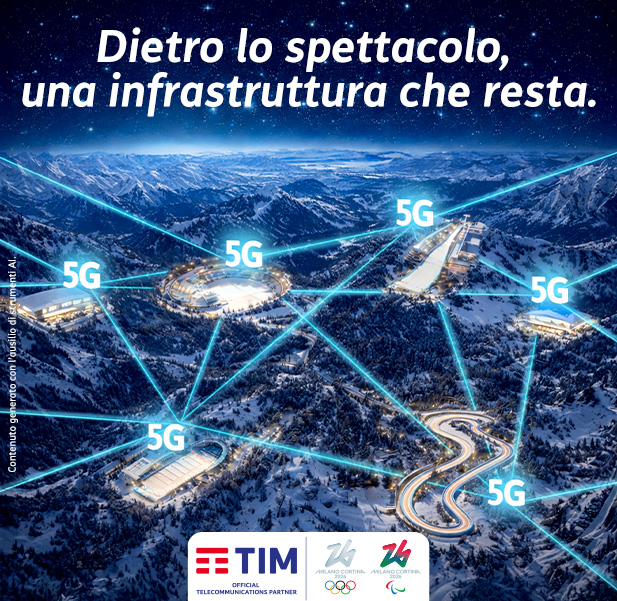
TIM has built thousands of kilometers of network, connected 15 venues and installed over 3,400 access points. This advanced connectivity infrastructure made it possible to stage the first multi-venue Games in Olympic history, with venues spread across cities and Alpine locations in Lombardy, Veneto and Trentino-Alto Adige. Ultra-fast fiber connections, enhanced 5G mobile coverage and advanced digital services supported the organization of the event and enabled millions of spectators to enjoy a digital experience of the highest quality.
This infrastructure now represents a technological legacy capable of transforming cities and regions into increasingly smart and connected ecosystems. Thanks to the roll-out of ultra-high-capacity networks, digital platforms and distributed sensors, the regions involved will be able to become Smart Lands, where technology and data help to improve citizens’ quality of life and the competitiveness of local businesses and communities.
Fiber and 5G networks will, in fact, enable new digital services for:
- smart mobility monitoring and management, with more efficient and sustainable traffic flows
- digital tourism, with immersive experiences and personalized services for visitors
- environmental monitoring and land safety, thanks to sensors and data analysis platforms
- more efficient management of cities and public services, through resilient, high-performance digital infrastructure.